Premium packaging makes a customer pause before they open the box. They notice the weight in their hands, the smooth surface under their fingers and the soft shine of a foil logo. None of these details changes what the product does, yet together they shape how much the customer values it. That is why luxury brands invest so heavily in the box. The good news is that premium packaging does not depend on a huge budget. It depends on smart choices about structure, materials, finishes, colour and the order in which the customer discovers each detail. This guide breaks down exactly what makes premium packaging feel premium, so you can apply the same principles to your own products.
The Short Answer
Premium packaging feels premium because of five things working together: a sturdy structure with real weight, quality materials with a pleasant texture, one or two refined finishes, a restrained colour palette and a planned unboxing sequence. Remove any one of these and the effect weakens. Get them all right and even a modest product feels special. The sections below explain each factor and how to use it.
1. Structure: Weight and Rigidity Signal Quality
People judge quality by touch before sight. A box that flexes or feels thin suggests a cheap product, while a firm, solid box suggests care and value. That is why rigid boxes sit at the heart of most premium packaging. Manufacturers build them from thick greyboard and wrap them in printed or textured paper, so they hold their shape and never fold flat like a standard carton.
Popular premium packaging structures include the following styles:
- Two piece boxes: a separate lid and base. Lifting the lid creates a slow, satisfying reveal.
- Magnetic closure boxes: a hinged lid with hidden magnets that closes with a gentle snap.
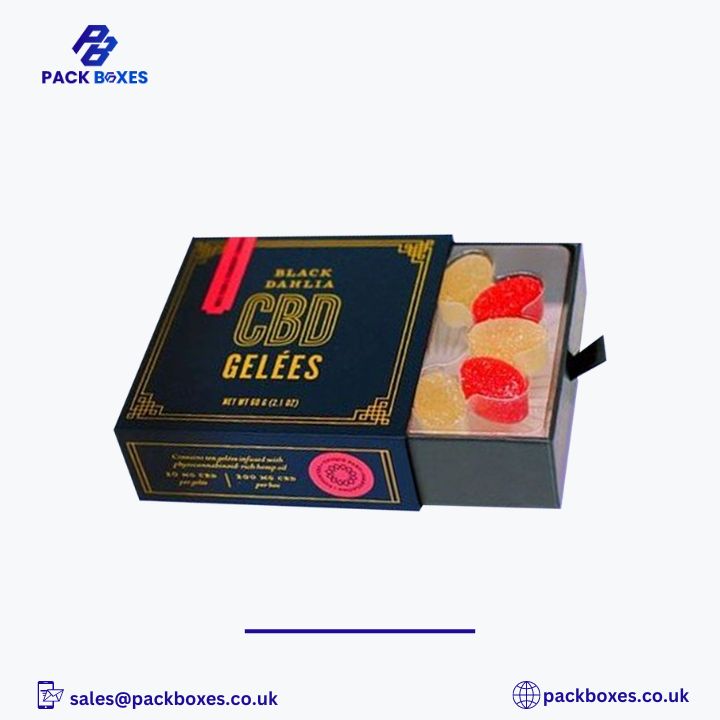
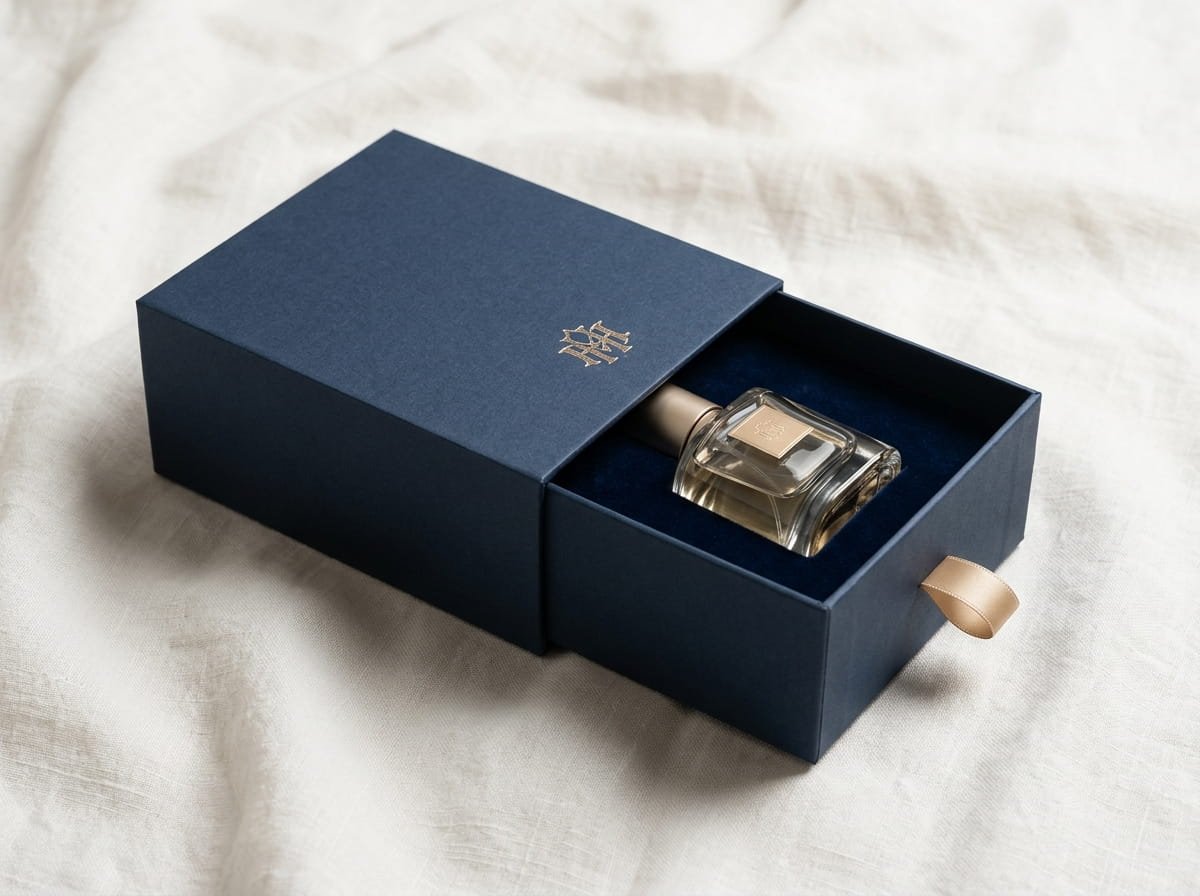
- Drawer boxes: a tray that slides out of an outer sleeve, adding a moment of movement.
- Book style boxes: a lid that opens like a cover, ideal for sets and collections.
- Shoulder boxes: a lid, base and visible neck, often used for fragrance and spirits.
Even folding cartons can work as premium packaging with thicker board and precise folds. Ask your supplier about board thickness and sample a few options side by side.
2. Materials and Textures You Can Feel
Texture tells the customer a story. Smooth, velvety surfaces feel modern and luxurious. Linen and felt papers feel crafted and classic. Natural textured papers feel honest and organic. Choose the premium packaging texture that matches your brand personality.
Common premium packaging materials include:
- Speciality wrap papers: textured, coloured or pearlescent papers that wrap rigid boxes.
- Soft touch laminated board: a matte, velvety surface that invites customers to touch.
- Uncoated textured papers: natural feeling papers with a subtle grain.
- Premium kraft: a heavier, cleaner kraft with a refined natural look.
- Fabric and velvet linings: soft interiors for jewellery, watches and gifts.
Always request physical swatches before you order premium packaging. Photos cannot show how a texture feels, and texture is one of the biggest reasons premium packaging stands apart.
3. Finishes That Catch the Light
Finishes add the detail that draws the eye. Used well, a single finish can lift a simple design into premium packaging territory.
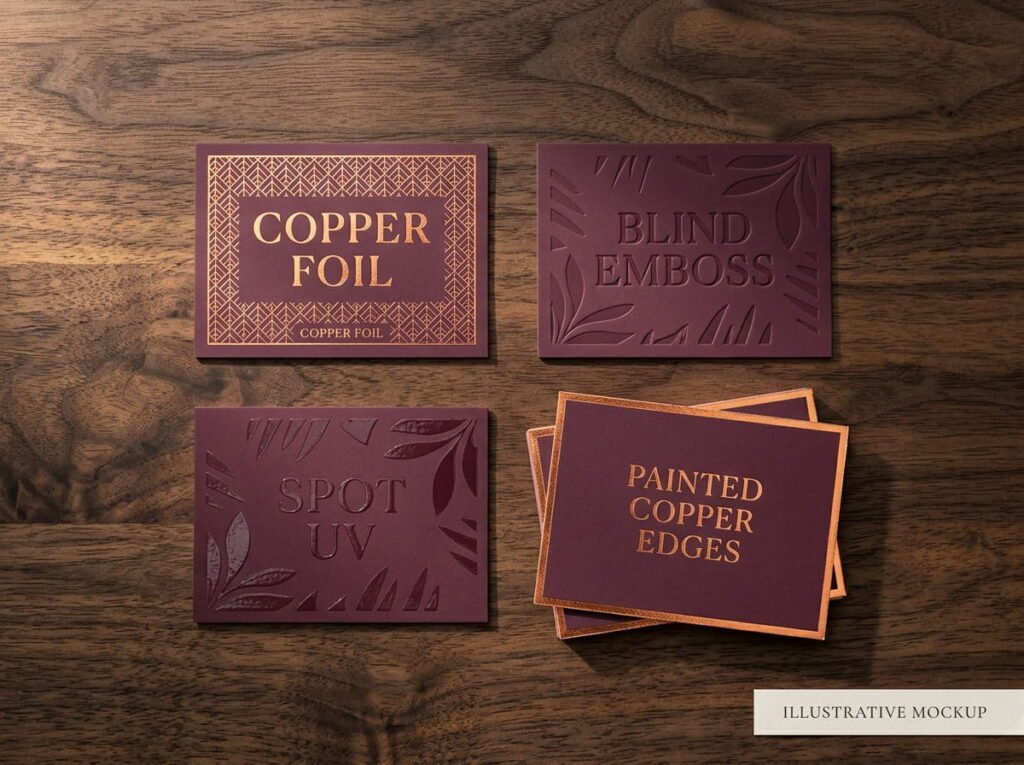
Foil stamping presses a thin metallic or coloured foil onto the surface with heat. Gold, silver, rose gold and copper foils give logos a polished shine.
Embossing raises part of the design above the surface, creating a raised logo or pattern you can feel.
Debossing presses the design into the surface, giving a subtle, recessed look. Blind debossing uses no ink at all, which feels understated and elegant.
Spot UV applies a glossy coating to selected areas only. On a matte background, a spot UV logo or pattern shines when it catches the light.
Soft touch lamination gives the whole box a smooth, velvet like feel and a deep matte look.
Edge painting colours the edges of the board, often in a metallic or contrast shade, for a crisp finishing detail.
Combine finishes with care. Foil plus embossing on the logo works beautifully, but foil, spot UV, embossing and bright colours all at once can look busy. Premium packaging relies on restraint.
4. Colour and Typography: Less Is More
Luxury brands rarely shout. They use calm, confident colour palettes and clean typography. For premium packaging, deep tones such as navy, forest green, charcoal, burgundy and black pair well with metallic accents. Soft neutrals like ivory, stone and blush create a gentle, refined feel.
In premium packaging, limit your palette to two or three colours and keep plenty of empty space. White space gives the logo room to breathe and makes the design feel considered. Choose one or two typefaces that match your brand, often a refined serif or a clean, minimal sans serif. Keep the logo small and precise rather than large and loud. These simple rules make a big difference to how premium packaging reads at first glance.
5. The Interior Matters Too
The outside makes the first impression, but the inside seals it. A printed or coloured interior surprises customers when they open the lid. A fitted insert holds the product perfectly in place, which looks deliberate and protects it in transit.
Insert options for premium packaging include card platforms wrapped in matching paper, EVA foam with a velvet top layer, and moulded pulp for brands with a natural message. Add a ribbon pull tab under the product so customers can lift it out easily. Small details like these show that someone thought about every step of the experience.
How Premium Packaging Builds Brand Value
Premium packaging does more than look good on the day of delivery. It shapes how customers talk about your brand and how much they feel comfortable paying. When the box feels solid and the reveal feels planned, buyers assume the same care went into the product. That perception supports higher price points and makes gifting more likely, since people want a present to look special before it even opens.
Premium packaging also helps in retail. On a crowded shelf, a calm, well finished box often stands out more than a loud one, because it looks confident. Clear brand marks, a single metallic detail and a quality board give shoppers a reason to pick the product up. Once it is in their hands, the weight and texture do the rest of the selling.
Finally, premium packaging gives customers something to share. A box that looks good in a photo or video carries your brand to new audiences at no extra cost. Design with the camera in mind: think about how the lid, the insert and the product look from above in natural light.
Planning a Premium Packaging Budget
Premium packaging costs depend on structure, size, materials, finishes and order quantity. Rigid boxes cost more than folding cartons because they involve more materials and more hand assembly. Each finish, such as foil or embossing, can add tooling and setup costs, which spread out over larger orders.
To control costs, decide where the premium feel matters most. Spend on the structure and one signature finish, then keep the rest of the design simple. Use the same box size across several products where you can, and change only the colour or label. Ask your supplier for a few quotes at different quantities, since unit prices often fall as volumes rise. Order samples before committing, so you only pay for premium packaging details that make a visible difference.
Unboxing Tips: Plan the Reveal
The unboxing experience turns premium packaging into a memory. Plan it like a short story with a beginning, middle and end.
- The arrival. Ship the presentation box inside a plain or lightly branded outer mailer so it arrives clean and undamaged.
- The first look. The customer sees your colour and a small, well finished logo. That alone sets the tone.
- The opening. A magnetic snap, a sliding drawer or a slowly lifting lid adds a moment of anticipation.
- The layers. Tissue paper, a belly band or a branded card can sit between the lid and the product.
- The reveal. The product sits in a fitted insert, centred and facing the customer.
- The finish. A thank you card, care guide or note from the founder closes the experience.
Avoid clutter in premium packaging. Too many leaflets, samples and stickers dilute the effect. Each layer should add something, not just fill space.
Premium Packaging and Sustainability
Premium does not have to mean wasteful. Many customers now expect luxury and responsibility together. Choose FSC certified board and papers where possible. Keep structures to a minimum number of materials so customers can separate and recycle them. Ask your supplier about plastic free alternatives to standard laminates and about water based coatings, since heavy plastic lamination can make board harder to recycle.
Durable rigid boxes also have a long second life. Customers often keep them for storage, jewellery or keepsakes, which keeps your brand in their home for years. Designing for reuse is one of the most effective ways to make premium packaging more sustainable.
Matching Premium Packaging to Your Product
Perfume and fragrance: premium packaging in shoulder or magnetic boxes with foil logos and fitted inserts suit the ritual of fragrance.
Jewellery and watches: small rigid boxes with velvet or EVA linings protect delicate pieces and feel special.
Candles: premium packaging for candles often uses two piece rigid boxes or drawer boxes with soft touch finishes and debossed logos create a calm, upscale look.
Skincare and cosmetics: clean folding cartons on thick board with spot UV or foil details feel premium while staying practical for retail.
Gift sets: book style or magnetic boxes with multi cavity inserts show every item at once.
Common Mistakes That Make Packaging Feel Cheap
- Thin board that bends or dents easily.
- Too many colours and finishes competing for attention.
- A logo that dominates the whole box.
- Products that rattle around without an insert.
- Poor print quality or misaligned folds.
- An outer shipper that lets the presentation box arrive scuffed.
Fixing even two or three of these issues can move your box closer to true premium packaging.
Final Word
Premium packaging is not about spending the most. It is about choosing the right details and using them with restraint. Start with a sturdy structure, add a material your customers will want to touch, pick one or two finishes that catch the light and plan every step of the reveal. Keep the palette calm, the logo refined and the interior as considered as the outside. Order physical samples, test the unboxing yourself and refine until it feels right. With this approach, premium packaging becomes a quiet promise of quality that customers feel the moment the box lands in their hands.
Frequently Asked Questions
1. What is premium packaging?
Premium packaging is high quality packaging that uses sturdy structures, refined materials, special finishes and a planned unboxing experience to make a product feel valuable and special.
2. What makes packaging feel luxurious?
Packaging feels luxurious through weight and rigidity, pleasant textures, restrained colours, refined finishes such as foil or embossing, and a well planned reveal with a fitted insert.
3. What is a rigid box?
A rigid box is a non folding box made from thick greyboard wrapped in printed or textured paper. It holds its shape firmly and is one of the most common premium packaging styles.
4. What is the difference between embossing and debossing?
Embossing raises a design above the surface of the board, while debossing presses the design into the surface. Both add a tactile detail you can feel with your fingertips.
5. What is soft touch lamination?
Soft touch lamination is a matte finish that gives packaging a smooth, velvet like feel. It is popular in premium packaging because it invites customers to touch the box.
6. What is spot UV on packaging?
Spot UV is a glossy coating applied to selected areas of a box, such as a logo or pattern. On a matte background, it creates a striking contrast between shine and matte.
7. Which foil colours look most premium?
Gold, silver, rose gold and copper foils are popular in premium packaging. The best choice depends on your box colour, with metallic foils standing out most on deep, matte backgrounds.
8. Is premium packaging expensive?
Premium packaging usually costs more than standard cartons, but brands can control costs by choosing one or two finishes, using folding cartons on thicker board and keeping the design simple.
9. Can premium packaging be sustainable?
Yes. Premium packaging can use FSC certified board, fewer materials, water based coatings and plastic free alternatives to laminates. Durable rigid boxes also encourage reuse.
10. How do I create a great unboxing experience?
Plan the reveal in layers, from a protective outer mailer to the box opening, tissue or card layers, a fitted insert that presents the product, and a thank you card to finish.