Mascara is a small product with a big job to do. It has to hold a liquid or cream formula, keep a long wand intact, survive shipping and look appealing next to a crowded wall of competitors. The box is the first layer of that protection and the first piece of your brand a shopper sees.
Well planned custom mascara boxes help your product arrive in good condition and give buyers confidence before they open the tube. This guide covers box styles, sizing, inserts, materials, finishes and design, along with ordering advice and answers to common questions.
Why Mascara Packaging Deserves Attention
Mascara is a high turnover product. People replace it often, compare brands quickly and read labels for claims like lengthening, volume or waterproof wear. That means the box has to communicate clearly in a short amount of time.
It also has to protect. Mascara tubes are slim, and the cap and wand can be damaged if the product shifts in the box. A leaking or dented tube creates a poor first experience and often a return. The right packaging reduces those risks.
And it builds trust. Because mascara is used near the eyes, shoppers look for signs of safety and quality. Clean printing, tamper evident features and clear information all help show that the brand takes care.
Popular Styles for Custom Mascara Boxes
Tuck end boxes. Simple and affordable. Their tall, narrow shape fits the tube well, and they ship flat before assembly.
Window boxes. A clear cutout lets shoppers see the tube, the color of the cap or a brush graphic. They add trust because customers can see the product.
Sleeve boxes. A printed sleeve slides over a tray. They suit premium lines, limited editions and brands that want a reveal moment.
Hang tab boxes. A punched tab lets the box hang on a retail peg. This suits stores that use hooks and pegboards.
Rigid boxes. Thick, sturdy boxes for luxury mascaras, sets and gifts.
Display boxes. Counter ready boxes that hold several tubes and encourage impulse buys.
Set and kit boxes. Made for mascara paired with a primer, remover or lash curler.
Sizing for a Long, Slim Product
Mascara tubes are narrow and relatively long, and the wand creates internal stress if the box is too loose. A good fit starts with accurate measurements.
- Measure the full tube. Include the cap and any decorative elements.
- Check the diameter at the widest point. Caps and grips can be wider than the body.
- Allow clearance. The tube should slide in easily without force, and not move around once it is in place.
- Plan for the insert. Insert thickness reduces internal space.
- Test with a sample. Use your real, filled product to check fit and movement.
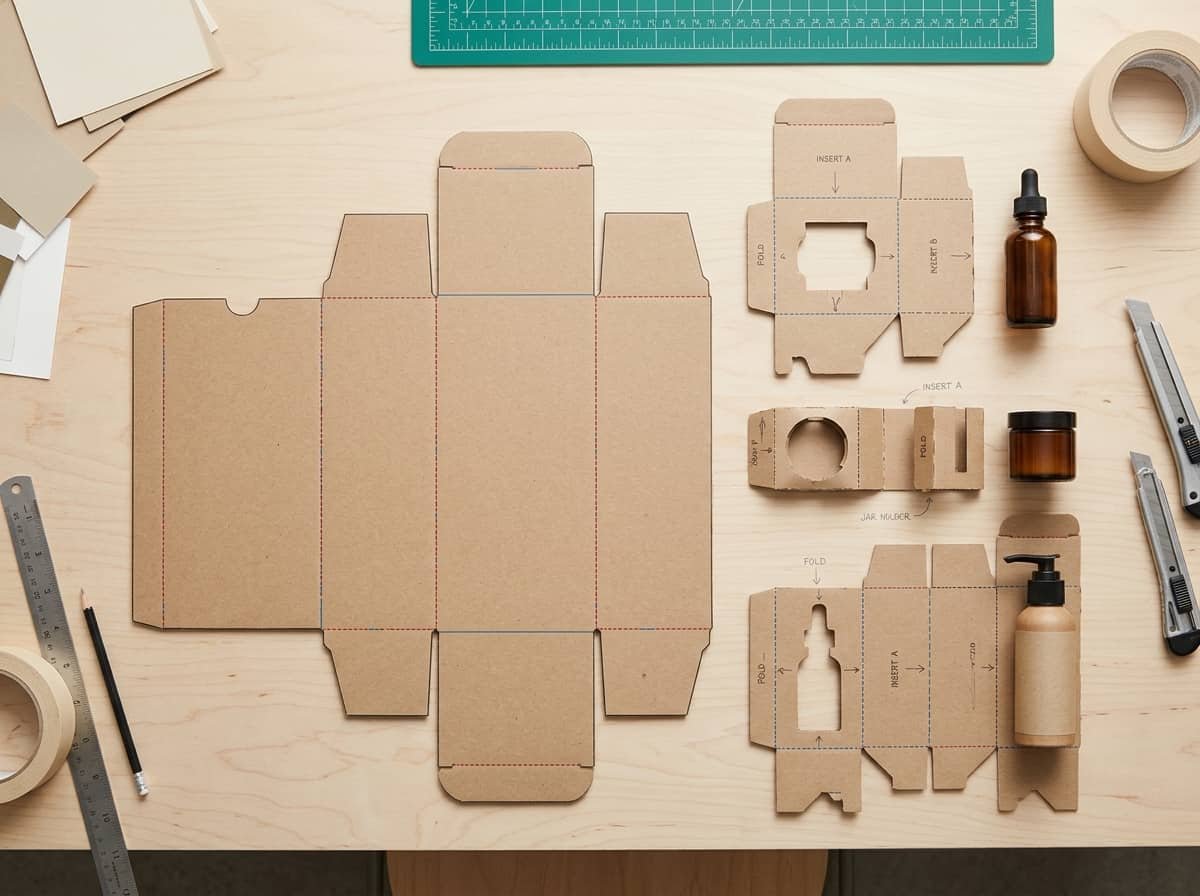
A dieline from your supplier shows the exact layout, folds and print zones, helping your designer avoid placing important text where folds or glue areas will interfere.
Inserts That Protect the Wand
Inserts keep the tube stable, protect the cap and help the box look neat when opened.
Paperboard cradles. Die cut cradles hold the tube at the top and bottom. They are economical and recyclable in many areas.
Molded pulp. Shaped fiber that holds the tube snugly. It suits brands wanting low plastic packaging.
Foam inserts. Offer strong cushioning and a precise fit, used for premium and rigid boxes.
Tray inserts for sets. Hold multiple items, such as mascara and a remover, in fixed places.
If you ship to customers, drop test a few sealed boxes. A good insert should keep the tube from rattling or tilting even after rough handling.
Material Choices
Folding carton. Light and printable, the standard for retail mascara boxes.
Kraft paper. A natural look for eco minded or minimalist brands.
Rigid board. A premium, high protection option.
Corrugated mailers. Useful as outer shipping boxes for online orders, protecting the retail box inside.
Moisture resistance can also matter, since beauty products may sit in bathrooms or travel in humid conditions. Ask your supplier about coatings that protect the print while keeping recycling in mind.
Finishes and Printing Effects
A finish can emphasize a message or add a premium touch. Consider these options:
- Matte lamination: Sleek and modern with low glare.
- Gloss lamination: Bright, vivid color.
- Soft touch: A smooth, velvet feel.
- Foil stamping: Metallic accents for the logo or product name.
- Embossing: Raised text or patterns.
- Spot UV: Glossy highlights on selected design elements, such as a lash graphic.
Strong contrast helps on a shelf. Black mascara boxes often use high contrast color, bold type and a lash or brush illustration. Keep the main claim readable from a short distance.
Design Tips for Mascara Boxes
Lead with the benefit. Shoppers usually want to know what the mascara does. State the main benefit, such as volume, length or curl, in simple language.
Show the brush. If the wand shape is a selling point, show it on the box or describe it clearly.
Keep claims honest. Do not promise results you cannot support. Regulations for cosmetic claims vary by country, so check the rules before printing.
Use clear shade and type information. Include color, formula type and whether it is waterproof or washable.
Include safety guidance. Instructions such as stopping use if irritation occurs and replacing the product regularly may be required or helpful. Confirm what applies in your markets.
Add batch and expiry information. Many markets require traceability or a period after opening symbol.
Design for the shelf and the phone screen. The box should be readable in a store and in a small online thumbnail.
Think about tamper evidence. A seal, shrink band or perforated tab reassures shoppers that the product is untouched.
How to Order Custom Mascara Boxes
- Finalize the product. Confirm tube size, cap design and wand length.
- Select the box style. Match it to retail or online sales and to your price level.
- Pick materials and finishes. Balance appearance with cost.
- Request a dieline and a sample. Test fit, color and handling with the real product.
- Check every artwork detail. Review barcodes, ingredient lists, claims, warnings and spelling.
- Set quantity and timing. Plan for storage space and leave time before launches.
- Confirm quality control. Ask how print, cuts and folds are inspected.
Mistakes to Avoid
- Ordering without a sample and discovering the cap does not fit.
- Skipping an insert and risking tube damage.
- Overloading the box with claims and small text.
- Forgetting required legal and safety information.
- Choosing finishes that raise cost but do not help the brand.
- Selecting a supplier on price alone.
Final Thoughts
Great mascara packaging fits the product, protects it, explains it and reflects your brand. Start with exact measurements, choose an insert that stops movement, pick finishes that support your identity and write clear, honest copy. With a tested sample and careful artwork review, your custom mascara boxes can protect every tube and help it stand out on the shelf and on the screen.
Frequently Asked Questions
1. What are custom mascara boxes?
Custom mascara boxes are packaging made to fit a brand’s specific mascara tube, with selected materials, printing, finishes and inserts. They protect the product and communicate the brand.
2. What size are mascara boxes?
There is no single standard size, because tube dimensions vary between brands. Measure your finished tube with the cap on and add a small clearance for easy insertion.
3. Which box style is best for mascara?
Tuck end boxes suit most retail products. Window boxes help shoppers see the tube, hang tab boxes suit peg displays and rigid or sleeve boxes suit premium lines.
4. Do mascara boxes need inserts?
Inserts are strongly recommended, especially for shipped products. They hold the tube steady and protect the cap and wand.
5. What materials are best for mascara packaging?
Folding carton is the most common. Kraft paper suits natural brands, rigid board suits luxury, and corrugated mailers help with shipping.
6. What information should be printed on a mascara box?
Usually the brand and product name, shade, net quantity, ingredients, directions, warnings, batch information and manufacturer details. Requirements vary by country, so verify them for each market.
7. Can mascara boxes have windows?
Yes. A window can show the tube or cap, which builds trust. Make sure the window film and cutout do not weaken the box.
8. How can I make mascara packaging more sustainable?
Use recycled or responsibly sourced paper, paper based inserts, minimal coatings and a right sized box. Be careful that any environmental claim is accurate.
9. How long does production take?
Timing depends on design, sampling, printing, finishing and shipping. Rigid and specialty boxes often need more time. Get the schedule confirmed in writing.
10. Should I request a sample before a full order?
Yes. A sample lets you test fit, print quality and durability with your actual product before you commit.