
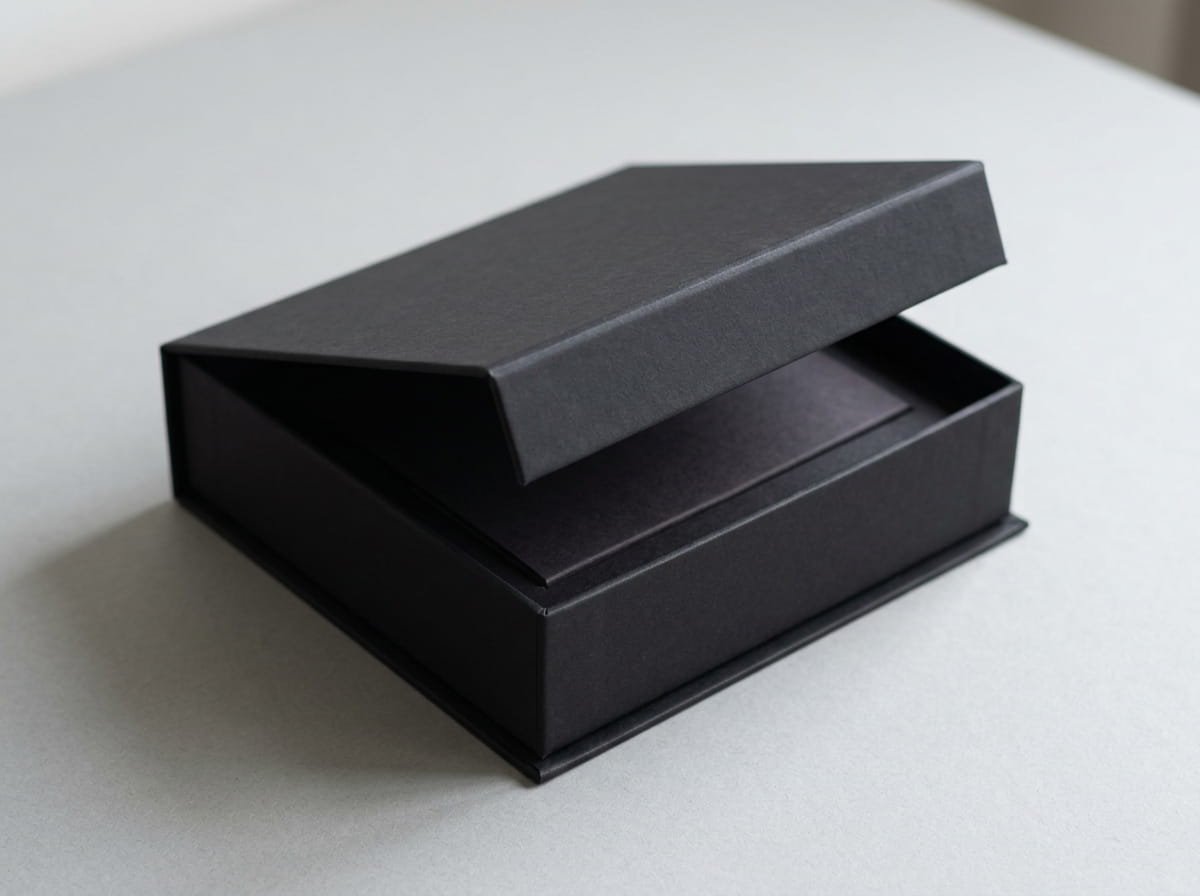
Rigid boxes UK buyers often describe them as packaging that feels expensive before you even open it. Think of the box a watch, a perfume bottle or a premium gift set arrives in. Naturally, they cost more than folding cartons, so the real question is simple. When does that extra spend pay for itself?
This guide explains what rigid boxes are, how factories make them, where they work best and how to decide whether your product genuinely needs one.
What Is a Rigid Box?
A rigid box uses thick, dense board that holds its shape permanently. Unlike a folding carton, it never collapses flat. Instead, the board gets cut, formed into a shell and then wrapped in printed or textured paper.
That construction explains why rigid boxes feel so solid in the hand. The walls carry no flex, and the lid sits firmly in place. You may also hear people call them setup boxes, gift boxes or luxury boxes, although all three describe the same product.
How Rigid Boxes Are Made
The process involves more steps than a standard printed carton, which is the main reason for the higher price.
- The factory cuts thick board for the base and the walls
- Workers form the walls and join them into a shell
- A printed or coloured wrap goes over the outside
- The wrap turns over the edges and gets smoothed into place
- Finishes such as foil, embossing or lamination follow
- Finally, any insert, ribbon or magnet goes in
Several of these stages rely on careful handling rather than a single machine pass. Consequently, both the time and the cost climb compared with a folding box.
Common Rigid Box Styles
Lid and Base
Two separate pieces, with a lid that lifts off the base. This classic gift box shape suits clothing, shoes and gift sets particularly well.
Magnetic Closure Box
A hinged lid snaps shut using hidden magnets. Because the close feels satisfying, this style works well for premium gift sets, subscription boxes and corporate gifting.
Drawer or Slide Out Box
An inner tray slides out of an outer shell. Jewellery, watches, chocolates and small electronics all suit this format.
Book Style Box
The lid opens like a hardback cover, usually with a magnetic catch. Brands often choose it for presentation sets, sample kits and product launches.
Collapsible Rigid Box
A rigid box designed to fold flat for storage and pop up when needed. It costs more per unit, yet it saves significant warehouse space, which matters on larger orders.
Where Rigid Boxes Work Best
Rigid packaging earns its place whenever the box becomes part of the product experience. Typical uses include:
- Perfume and premium fragrance
- Jewellery and watches
- High end skincare and cosmetics sets
- Chocolates, spirits and hamper style gifts
- Electronics and accessories
- Corporate gifting and press kits
- Wedding and event favours
It also works well when customers keep the box. A reusable box keeps your brand sitting in someone’s home long after the purchase, which few other packaging formats achieve.
When a Folding Carton Is the Better Choice
Rigid is not always the right answer. In fact, a standard printed carton makes more sense when:
- The product sells cheaply and in volume
- The box gets opened once and recycled
- Storage space is tight, since rigid boxes never ship flat
- You need the lowest possible unit price
- The item posts individually and needs corrugated protection instead
A well designed cardboard box with a good finish still looks excellent. Indeed, many successful brands use folding cartons with foil detailing rather than paying for rigid construction.
What Rigid Boxes Cost and Why
Rigid boxes sit at the higher end of packaging pricing. Four factors drive that cost.
Material volume. The board runs much thicker, so each box consumes more raw material.
Hand finishing. Wrapping and assembly take longer than folding a printed carton.
Shipping and storage. Rigid boxes arrive assembled, so they occupy more space in transit and in your storeroom.
Add ons. Magnets, ribbons, foam inserts and custom trays each push the total higher.
For that reason, rigid packaging makes most sense for products with enough margin to carry the cost. Alternatively, it suits limited runs where presentation matters more than unit price.
Design Tips for Rigid Packaging
Choose the Wrap Carefully
The outer paper decides how the box feels. Matte laminated wraps feel soft and modern, textured papers add a tactile quality, and uncoated stocks look natural. Therefore, ask for samples before you decide.
Use One Strong Finish
A single gold foil logo on a dark wrap usually beats several competing effects. In design, restraint tends to read as premium.
Plan the Insert Early
Inserts hold the product in place and create the moment when the lid lifts. Card, foam and moulded pulp all work, although each option changes both the cost and the protection.
Remember the Inside
The inside of the lid is prime space. A printed message, pattern or thank you note costs little, yet it improves the unboxing experience noticeably.
Think About Posting
A rigid box is strong, but it is not a shipping box. If orders travel by courier, plan an outer corrugated mailer to protect the wrap and the corners.
How to Decide If Rigid Is Worth It
Work through these five questions:
- Do customers buy this product as a gift or a treat?
- Would someone realistically keep the box afterwards?
- Does your price point support the packaging cost?
- Will customers photograph or share the box online?
- Is the product fragile enough to benefit from a sturdier shell?
If you answer yes to most of them, rigid packaging probably pays for itself. Otherwise, a quality folding carton will serve you better and cost considerably less.
Get a Quote for Rigid Boxes UK
Rigid boxes turn packaging into part of the product itself. They protect well, they feel premium and customers often keep them. However, they genuinely do cost more than standard cartons, so the right choice depends on your product, your margin and how your customers buy.
Pack Boxes produces rigid packaging alongside cardboard, kraft and corrugated boxes, with orders from 50 units, no die or plate charges, free graphic design and free UK delivery. Send your product details and sizes through the quote form for a price.
Frequently Asked Questions
Do rigid boxes arrive flat?
Standard rigid boxes arrive assembled, because they hold their shape permanently. Collapsible rigid boxes are the exception, since they fold flat for storage.
Can rigid boxes be printed in full colour?
Yes. Printing happens on the wrap that covers the box, so full colour artwork, foiling, embossing and lamination all work.
Are rigid boxes recyclable?
The board and paper wrap are paper based. However, magnets, ribbons and heavy laminations complicate recycling, so keep the construction simple and check current gov.uk guidance before adding claims.
Can I post a product in a rigid box on its own?
It is safer to place the rigid box inside a corrugated mailer, which protects the wrap and the corners during delivery.
What is the difference between a rigid box and a folding carton?
A rigid box uses thick board that holds its shape permanently. A folding carton, meanwhile, uses thinner board that ships flat and folds into shape.