Counter display boxes are one of the simplest ways a retailer can turn a few seconds at the checkout into extra revenue. A shopper waiting to pay has nothing to do but look around, and whatever sits right beside the register gets that attention. When the right product is packed in a clean, well printed box at that exact spot, a quick glance often becomes a quick purchase. This guide explains why that happens, what the research says, and how to design counter display boxes that actually move stock.
What Are Counter Display Boxes?
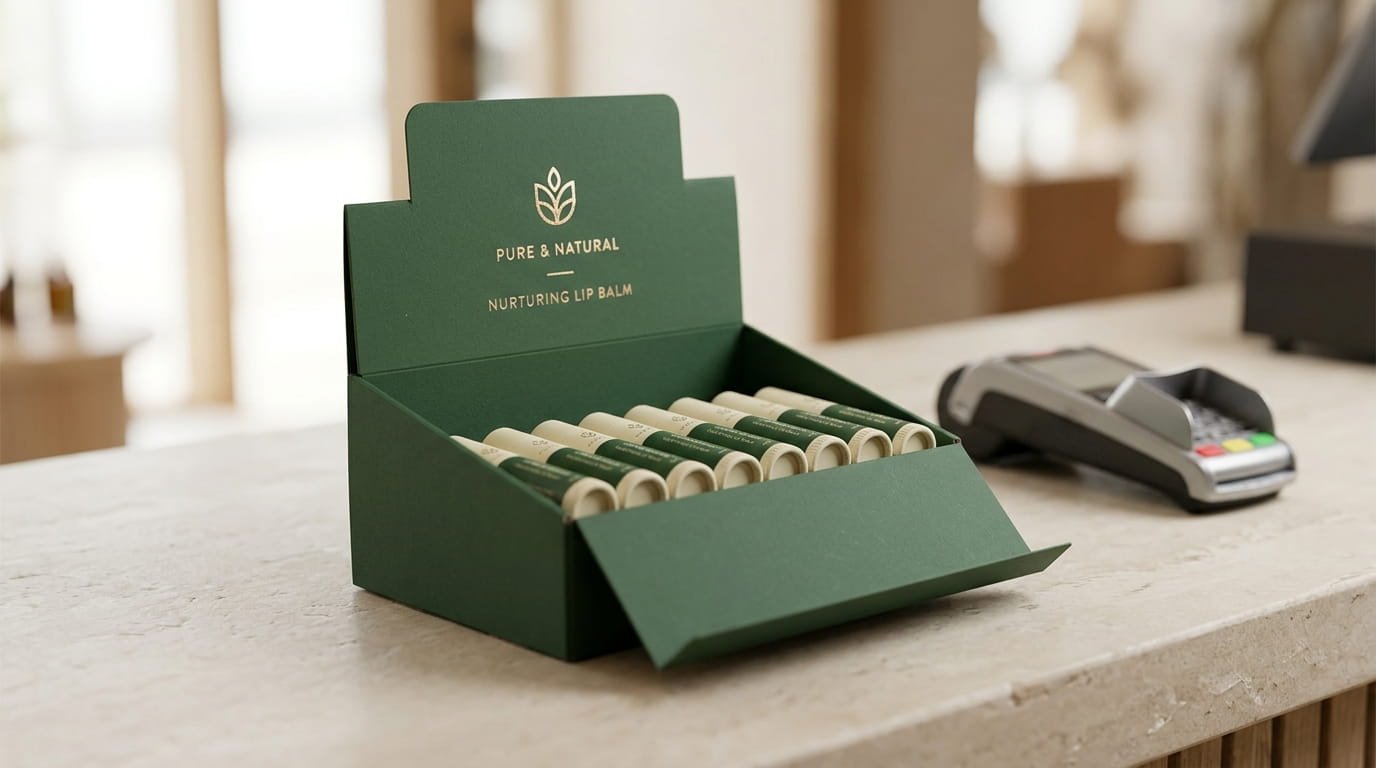
Counter display boxes are small, self standing cardboard or paperboard units built to sit on a countertop, usually near the till. Most have a tear away or fold down front panel, a raised header card for branding, and an open tray that holds several units of one product. Once the box is opened, the packaging itself becomes the display, so there is no need for extra shelving or fixtures.
You will see them holding lip balms, candy, chewing gum, batteries, phone accessories, key chains, CBD products, cosmetics samples, and small health items. The common thread is that products sold in counter display boxes are low cost, light, and easy to grab. Nobody plans a trip to the store for a lip balm, but plenty of people buy one while they wait in line.
Why the Checkout Counter Matters So Much
The checkout is where planned shopping ends and spare attention begins. Several studies show how much buying happens at this point:
- Roughly 87 percent of U.S. buyers report having made an impulse purchase at the checkout counter, according to studies cited by Inc.
- The 2012 Shopper Engagement Study by POPAI (now Shop!) found that 76 percent of shopping decisions are made in store, an all time high at the time, and that shoppers paying by card or other non cash methods were the most likely to buy on impulse.
- A 2014 Shop! compliance study reported that retail displays in the mass merchant channel contributed to a 32 percent increase in product sales.
The takeaway is clear. A large share of choices are made after the shopper walks through the door, and the counter is the final chance to influence them. Counter display boxes put a product in that final window without taking up floor space.
The Psychology Behind Impulse Buys at the Register
Understanding why people buy at the till helps you design better counter display boxes.
Idle waiting time. Research on self checkout shows how important waiting is. An IHL Consulting Group study found that impulse purchases dropped by 32.1 percent among women and 16.7 percent among men when they used self checkout instead of a staffed lane. Shorter waits and busier hands mean fewer glances at the counter. In a staffed lane, the shopper is standing still, and a good display fills that pause.
Low price, low risk. Small items feel like a harmless treat. The decision costs very little, so shoppers do not stop to compare options.
Shopping style. Wharton research led by marketing professor David Bell found that shoppers who see themselves as very fast and efficient are 82 percent less likely to make unplanned purchases than average. Your counter display boxes will not win over every shopper, but they work best on relaxed browsers, so the display needs to catch the eye in a second or two.
How Counter Display Boxes Boost Impulse Sales
1. They Put Products Within Arm’s Reach
A product on a back shelf has to be found. A product beside the card reader is already in view. Counter display boxes remove every step between noticing and buying, which is exactly what impulse sales depend on.
2. They Make Small Products Look Organized
Loose items on a counter look messy and are easy to ignore. A neat tray of matching units in printed counter display boxes looks deliberate and trustworthy. Shoppers are more willing to pick up something that looks like it belongs there.
3. They Carry the Brand Message
The header card and side panels of counter display boxes act as a mini billboard. In a POPAI study of convenience stores, in store displays, signage and media grew sales by 5 to 13 percent. The same research found that messages about savings or cents off lifted sales by 36 percent, signage with a product photo by 13 percent, and a price mention by 8 percent. Those are useful lessons for anyone printing a display header: show the product, show the price, and highlight any deal.
4. They Work in Almost Any Store
Pharmacies, gas stations, salons, gift shops, cafes, bookstores and supermarkets all have a counter. Because counter display boxes are compact and ship flat, brands can place them across many types of retailers without asking for dedicated shelf space.
5. They Double as Shipping Packaging
Many counter display boxes are shipped to the store already filled. The retailer opens the lid, folds back the panel, and the display is ready. That saves staff time, which makes store owners far more likely to accept and keep your display on the counter.
Design Tips for Counter Display Boxes That Sell
Not every display earns its spot. Use these tips to make your counter display boxes work harder.
Keep the Footprint Small
Counter space is limited, so counter display boxes must earn their place. Retailers protect it. A compact box that holds 12 to 24 units is easier to place than a large unit that blocks the card reader. Measure common counter layouts in your target stores before you finalize the size.
Use a Strong Header Card
The header is the first thing shoppers see at eye level. Keep the brand name large, use one short benefit line, and include a clear product image. Based on the POPAI findings above, adding a price or a deal message is worth testing.
Choose Colors With Purpose
A busy rainbow design can look cheap and clash with the store. Two or three brand colors with plenty of contrast usually stand out better on a cluttered counter. Premium products often look best with black, white, kraft, gold or silver finishes.
Pick the Right Material
Most counter display boxes are made from SBS paperboard, kraft board or corrugated E flute board. Paperboard gives a smooth surface for sharp printing. Corrugated board is stronger for heavier products such as candles, jars or bottles. Kraft suits natural, organic and eco friendly brands.
Add Finishes That Invite Touch
Matte lamination, spot UV, embossing and foil stamping make counter display boxes feel more premium. On counter display boxes, a finish that catches the light can pull the eye toward the counter even from a few feet away.
Make Restocking Easy
An empty display gets thrown away. Design the tray so staff can see stock levels at a glance and refill it quickly. Some brands print a reorder code or QR code on the back panel to help store owners restock.
Stay Sustainable
Recyclable board and soy or water based inks help your counter display boxes fit the expectations of eco conscious shoppers and retailers. Clearly print a recycling symbol if the packaging can be recycled.
Best Products to Sell in Counter Display Boxes
The best fit is a product that is small, affordable and easy to understand at a glance. Popular choices include:
- Candy, mints and chewing gum
- Lip balm, hand cream and travel size cosmetics
- Phone chargers, earbuds and cables
- Batteries and small hardware items
- Snack bars and single serve snacks
- Vape, CBD and wellness products where legally allowed
- Key chains, stickers and small gift items
- Hair ties, clips and small accessories
If a shopper needs a long explanation before buying, the product probably belongs on a shelf with full packaging instead of in counter display boxes.
Where to Place Counter Display Boxes in Store
For counter display boxes, placement matters as much as design. A few practical rules help:
- Right beside the payment terminal. This is where hands and eyes go during payment.
- At the start of the queue. Shoppers in line have the most time to look.
- Away from clutter. A display surrounded by flyers, bags and receipts gets lost.
- Rotated by season. Fresh products and seasonal designs keep regular customers noticing your counter display boxes instead of tuning them out.
Track sales from your counter display boxes for a few weeks after placing a new display. Compare different spots, headers or price messages, and keep what performs best.
Common Mistakes to Avoid
- Overloading the box. Too many different products in counter display boxes confuse shoppers. One product line per box usually works best.
- Weak construction. A box that sags or tears after a few days looks neglected and hurts the brand.
- Tiny text. Shoppers will not lean in to read. If it cannot be read from arm’s length, make it bigger.
- Ignoring the retailer. Store owners decide what stays on the counter. Counter display boxes that are easy to set up, refill and keep tidy are the ones that survive.
Final Thoughts
The checkout counter is small, but it sees almost every customer who walks into a store. With most buying decisions made in store and the majority of shoppers admitting to checkout impulse buys, that space is valuable. Well designed counter display boxes put the right product in front of a waiting shopper, tell a clear brand story in a second, and make buying effortless. Keep the box compact, the message simple and the build sturdy, and your counter display boxes can turn idle moments at the register into steady extra sales.
Frequently Asked Questions
What are counter display boxes used for?
Counter display boxes hold and present small products on a retail countertop, usually near the register, to encourage impulse purchases while shoppers wait to pay.
What material is best for counter display boxes?
SBS paperboard is ideal for light items and sharp printing, corrugated board suits heavier products, and kraft board fits natural or eco friendly brands.
How many products should a counter display box hold?
Most hold between 12 and 24 units, depending on product size. The goal is a full, tidy look without taking too much counter space.
Do counter display boxes really increase sales?
Industry research supports it. A Shop! study linked retail displays in mass merchant stores to a 32 percent sales increase, and POPAI found in store displays and signage lifted convenience store sales by 5 to 13 percent.
Can counter display boxes be customized?
Yes. Size, shape, material, printing, header card, inserts and finishes such as foil, embossing and spot UV can all be customized to match your brand and product.