Key takeaways
- Custom cosmetic boxes protect formulas, communicate brand value and carry the legal information UK law requires.
- Folding cartons suit most lipsticks, serums and creams, while rigid boxes suit gift sets and premium launches.
- Finishes such as soft-touch lamination and foil raise perceived value, but one or two well-chosen effects work best.
- Plan artwork, compliance text and minimum orders before you request a quote.
A customer judges a beauty product before they touch the formula. They see the box on a shelf or in a delivery bag, and within seconds they decide whether it feels trustworthy, premium or ordinary. Custom cosmetic boxes shape that first impression, and they continue to work every time the product sits on a bathroom shelf or in a gift bag.
This guide explains how custom cosmetic boxes work, which styles and materials suit each product, how finishes affect cost and what UK labelling rules mean for your design. Whether you launch your first lip balm or expand an established skincare range, you will find clear steps to follow.
What Are Custom Cosmetic Boxes?
Custom cosmetic boxes are cartons or rigid boxes made to the exact size, shape, material and artwork of your product. Instead of a generic white box, you receive packaging cut for your bottle, jar, tube or palette, printed in your brand colours and finished to match your positioning.
Brands use custom cosmetic boxes across the whole beauty category: lipsticks, mascaras, serums, face creams, perfumes, nail polishes, sheet masks and gift sets.
A good box does four jobs. It protects the product from knocks and light. It shows the brand name and promise at a glance. It carries ingredients, directions and legal details. It also supports the sale, because shoppers often pick up a product, read the box and decide in the aisle.
Main Styles of Custom Cosmetic Boxes
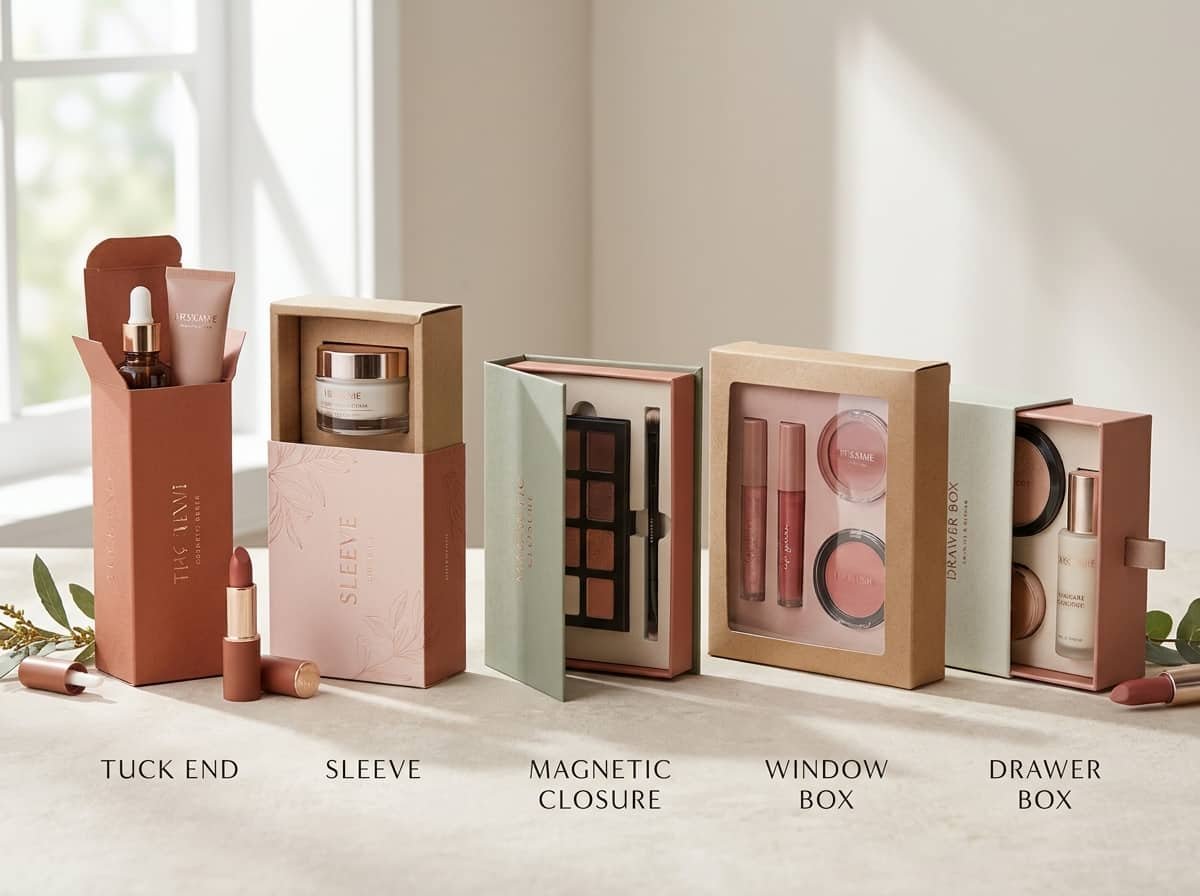
Four styles of custom cosmetic boxes cover most beauty products.
Tuck-end folding cartons are the standard choice. They fold flat for storage, assemble fast and cost little. Most lipsticks, creams and serums sell in this style.
Reverse tuck and straight tuck variants change which side opens. Reverse tuck boxes open from the back, which suits tall bottles that stand on a shelf.
Window boxes include a clear cut-out that shows the product, such as a nail polish shade or a palette. The window builds trust because customers see the real item.
Rigid boxes use thick board wrapped in printed paper. They feel heavy and premium, so brands use them for gift sets, fragrance and launch editions.
Pick custom cosmetic boxes that match how people buy the product. A shelf item needs a strong front panel, while an online item needs a sturdy box that survives the courier.
Choosing the Right Material
Material affects the look, strength and cost of custom cosmetic boxes. Three options dominate beauty packaging.
SBS (solid bleached sulphate) board gives a bright white, smooth surface that prints sharp colour. Many custom cosmetic boxes use it for lipsticks and skincare because the finish looks clean and takes foil well.
Kraft board has a natural brown tone and suits organic, minimal or eco-focused brands. It prints well in one or two colours and signals simplicity.
Rigid greyboard forms the core of premium gift boxes. A printed paper wrap covers it, and the structure holds up for years.
Thin board suits light items such as lip balms. Heavier bottles need thicker board or a supporting insert.
Ask for FSC-certified board. FSC certification shows the fibre comes from responsibly managed forests, and it gives you a clear claim for your custom cosmetic boxes. Keep the certificate number on file if you print the logo.
Finishes That Make Custom Cosmetic Boxes Stand Out
Finishes turn plain custom cosmetic boxes into branded objects. Each one affects touch, light and price.
- Soft-touch lamination gives a velvet feel that customers remember.
- Matt lamination reduces glare and suits a calm, modern look.
- Gloss lamination gives bright colour and a polished shine.
- Spot UV adds raised gloss to a logo or pattern against a matt background.
- Foil stamping applies metallic gold, silver or rose gold to a logo or border.
- Embossing and debossing raise or press a design into the board.
Choose with care. A blush-pink box with a soft-touch finish and a gold foil logo already looks premium. Adding spot UV, embossing and a pattern on top often creates noise. Beauty buyers respond to clean design and clear hierarchy.
Test finishes on a printed sample before you order. Colour changes under lamination, and foil can look different in store lighting than on screen. A sample of your custom cosmetic boxes saves expensive surprises.
UK Labelling Requirements for Cosmetic Packaging
Cosmetic products sold in Great Britain must follow the UK Cosmetics Regulation, and your box often carries most of the required information. Confirm the full list with your Responsible Person or a regulatory adviser, because rules differ by product type. Common items include:
- The name and address of the Responsible Person
- The nominal content, by weight or volume
- The period after opening symbol or the date of minimum durability
- Batch number for traceability
- The function of the product, unless the presentation makes it clear
- The full ingredients list, using INCI names
- Warnings and precautions where the formula needs them
Many custom cosmetic boxes also use the outer carton to carry this text so that small tubes and bottles stay uncluttered. Leave enough space on the dieline for legal copy at a readable size. Cramped text frustrates customers and can cause compliance problems.
Place compliance copy on the side or back panel and keep the front for the brand and the product name.
How Custom Cosmetic Boxes Build Trust and Lift Sales
Packaging affects purchase decisions more than many founders expect. Sturdy, well-printed custom cosmetic boxes signal that the product inside deserves its price. A flimsy carton with blurred print suggests the opposite.
Custom cosmetic boxes help in five practical ways:
- They protect. A snug fit stops bottles rattling and caps loosening.
- They explain. Clear panels tell customers what the product does and how to use it.
- They differentiate. A distinct colour or finish helps your product stand out on a crowded shelf.
- They show care. Neat folds and clean edges reflect production quality.
- They invite sharing. Customers post attractive unboxing moments, which brings new buyers.
Tamper-evident features on custom cosmetic boxes add reassurance. A seal sticker, a perforated tab or a glued flap lets customers know nobody opened the product. Many shoppers look for this on skincare and fragrance, where hygiene matters.
Inserts and Internal Protection
Inserts hold the product in place and improve the unboxing moment. For custom cosmetic boxes, the main options include:
- Paperboard inserts with die-cut holes that grip bottles and jars
- Moulded pulp trays that fit shaped items and recycle easily
- EVA foam for fragile glass or high-value fragrance
- Tissue paper for a soft finish in rigid gift boxes
Glass serum bottles and perfume need firm support, while a tube of hand cream needs very little. Match the insert to the weight and fragility of the product. Test the pack by dropping a filled box from waist height onto a hard floor. If the product moves or breaks, adjust the insert before you place a full order.
Skip plastic inserts where you can. Paper-based options keep the whole box recyclable, which supports sustainability claims.
Sustainability in Cosmetic Packaging
Beauty shoppers increasingly check packaging materials. Brands that choose recyclable board, plant-based inks and plastic-free finishes meet that expectation. Custom cosmetic boxes in recyclable board answer that concern. Strong, honest claims also matter, so avoid vague wording such as “eco-friendly” without proof.
Practical steps for greener custom cosmetic boxes include:
- Use FSC-certified or recycled board
- Choose water-based or soy-based inks
- Avoid plastic window film, or select a recyclable alternative
- Reduce the box size so it uses less material
- Print recycling instructions on the pack
Some finishes affect recycling. Foil and heavy plastic lamination can reduce recyclability in certain systems. If recyclability is a core promise, ask your supplier about aqueous varnish or paper-based coatings.
What Custom Cosmetic Boxes Cost and How to Order
Prices for custom cosmetic boxes depend on style, size, board, quantity and finishes. As a rough guide, printed folding cartons cost about £0.25 to £0.90 each at 1,000 units, and larger runs cost less per box. Rigid boxes cost roughly £2.50 to £7.00 each at 500 units. Setup charges, dies and delivery add to the order, so ask for an all-in quote.
Follow this order process for custom cosmetic boxes:
- Measure your product in millimetres, including the cap and any seal.
- Choose the style and material that suit your product and price point.
- Prepare artwork on the supplier’s dieline, with legal text included.
- Review a digital proof, then request a physical sample.
- Approve production and confirm the delivery date.
- Inspect the delivery against the approved sample.
Allow two to four weeks to produce custom cosmetic boxes after approval, and more if you add complex finishes.
Common Mistakes to Avoid
Brands repeat the same errors when they order custom cosmetic boxes for the first time. Avoid these:
- Wrong measurements. Always measure the filled product, not the empty container.
- Late compliance checks. Confirm label text before print, not after.
- Too many effects. Fewer finishes usually look better and cost less.
- Ignoring the shipping journey. Test the box in the post, not only on the shelf.
A short checklist before you approve your custom cosmetic boxes catches most of these problems and protects your budget.
Conclusion
Custom cosmetic boxes do more than hold a product. They protect the formula, carry legal information, express your brand and influence the buying decision. The right style, material and finish depend on your product, your price point and your customer.
Start with clear measurements and a simple design. Test a sample, check your compliance text and choose finishes that support your message. With careful planning, custom cosmetic boxes become one of the strongest and most cost-effective parts of your brand.
Frequently Asked Questions About Custom Cosmetic Boxes
1. What are custom cosmetic boxes?
Custom cosmetic boxes are cartons or rigid boxes made to the exact size, material and printed design of a beauty product. They protect the item, display the brand and carry labelling details such as ingredients and batch numbers.
2. What is the best material for cosmetic boxes?
SBS board suits most beauty products because it prints sharp colour and accepts foil and lamination. Kraft board suits natural and eco-focused brands, and rigid greyboard suits premium gift sets. Choose by product weight, brand style and budget.
3. How much do custom cosmetic boxes cost in the UK?
Printed folding cartons typically cost £0.25 to £0.90 each at 1,000 units, excluding VAT. Rigid boxes typically cost £2.50 to £7.00 each at 500 units. Finishes, inserts, tooling and delivery add to the total.
4. What is the minimum order for custom cosmetic boxes?
Minimums vary by supplier and print method. Digital printing may allow runs from 100 to 250 boxes, while litho printing often starts at 1,000 or more. Ask each supplier for its minimum and a price at several quantities.
5. What information must appear on cosmetic packaging in the UK?
UK cosmetic labels generally need the Responsible Person’s name and address, nominal content, period after opening or minimum durability date, batch number, ingredients list and relevant warnings. Confirm the exact requirements with your Responsible Person before printing.
6. Which finish is best for luxury cosmetic boxes?
Soft-touch lamination with foil stamping on the logo is a popular premium combination. It feels smooth and looks refined without overloading the design. Test a sample to check how colour and foil appear under shop lighting.
7. Can cosmetic boxes be recyclable?
Yes. Boxes made from FSC-certified or recycled board with water-based inks recycle easily. Plastic lamination, foil and plastic windows can reduce recyclability, so ask your supplier about aqueous varnish and paper-based alternatives.
8. How long does it take to produce custom cosmetic boxes?
Production usually takes two to four weeks after artwork approval. Complex finishes, rigid construction and overseas manufacturing add time. Request a sample first and book reorders before stock runs low.
9. Do cosmetic boxes need inserts?
Inserts help when the product is heavy, fragile or loose, such as glass serum bottles and perfume. Paperboard and moulded pulp inserts hold items firmly and recycle easily. Light items such as lip balms often need no insert.
10. How do I choose the right size for cosmetic boxes?
Measure the filled product in millimetres, including the cap and any seal, then add a small tolerance of one to two millimetres per side. Ask your supplier for a white sample to confirm the fit before you print.