Bespoke cardboard boxes give your product a box built around its exact size, weight, and brand. Stock cartons work for many items, but they often leave gaps, waste material, and look like every other parcel on the doorstep. If your product has an unusual shape, a premium price, or a strong brand story, bespoke packaging solves problems that standard boxes cannot. This guide explains when to switch, what bespoke cardboard boxes can include, and how to plan the project from the first measurement to the final delivery. You will also see where the costs come from, so you can brief a supplier with confidence.
What Bespoke Cardboard Boxes Mean
Bespoke cardboard boxes are made to your specification. You choose the dimensions, the board, the structure, the print, and the finish. A supplier then builds a custom cutting tool, called a die, and produces the boxes to match. Stock boxes come in fixed sizes, so you adapt your product to the box. Bespoke packaging reverses that: the box adapts to your product. Many people use “custom” and “bespoke” as the same word. In practice, bespoke packaging usually implies deeper design input, such as a new structure, a special insert, or a one-off size, while custom packaging may only add your logo to a standard box.
Signs That Off-the-Shelf Packaging Is Not Enough
Standard boxes stop working when problems repeat. Watch for these signs:
- Your product rattles or shifts. Extra space leads to breakage and returns.
- You pay to ship air. Oversized boxes raise courier costs, especially under volumetric weight pricing.
- Your brand looks generic. A plain carton with a sticker does not match a premium price.
- Your product has an odd shape. Bottles, tools, kits, and multi-item sets rarely fit stock sizes.
- You use too much filler. Void fill adds cost and creates waste that customers notice.
If you recognise two or more of these, bespoke cardboard boxes will likely pay for themselves.
Benefits of Bespoke Packaging
A fitted box protects your product better. Tight dimensions stop movement, so fewer items arrive damaged. Smaller boxes cut material use and shipping weight, which lowers freight costs on every order. Bespoke packaging also builds brand recognition, because your box looks and feels unlike any competitor’s. Customers remember a box that opens in a clever way or reveals the product with care. That memory drives reviews, social posts, and repeat orders. Retailers also respond well to bespoke cardboard boxes, since a strong shelf presence helps a product sell faster. Better protection, lower shipping costs, and stronger branding give you three returns from one decision.
Choose a Structure That Fits Your Product
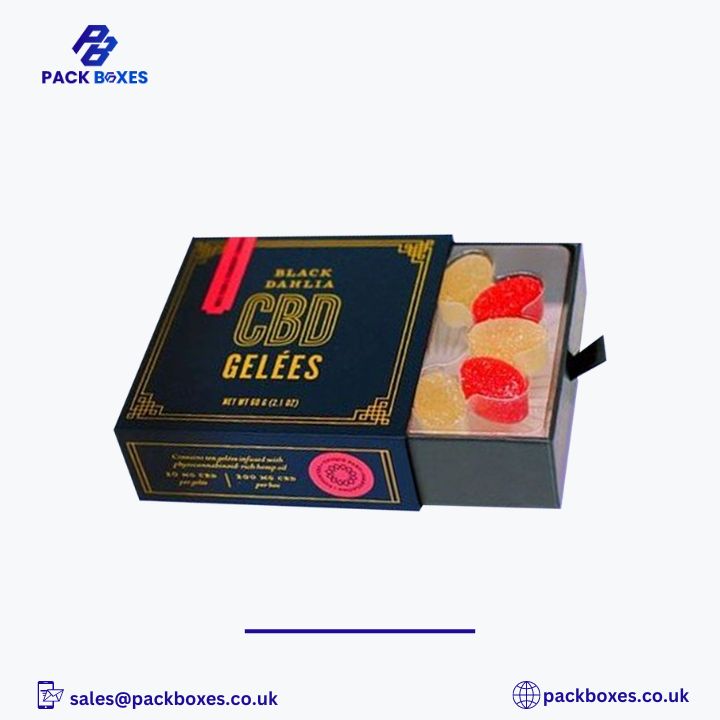
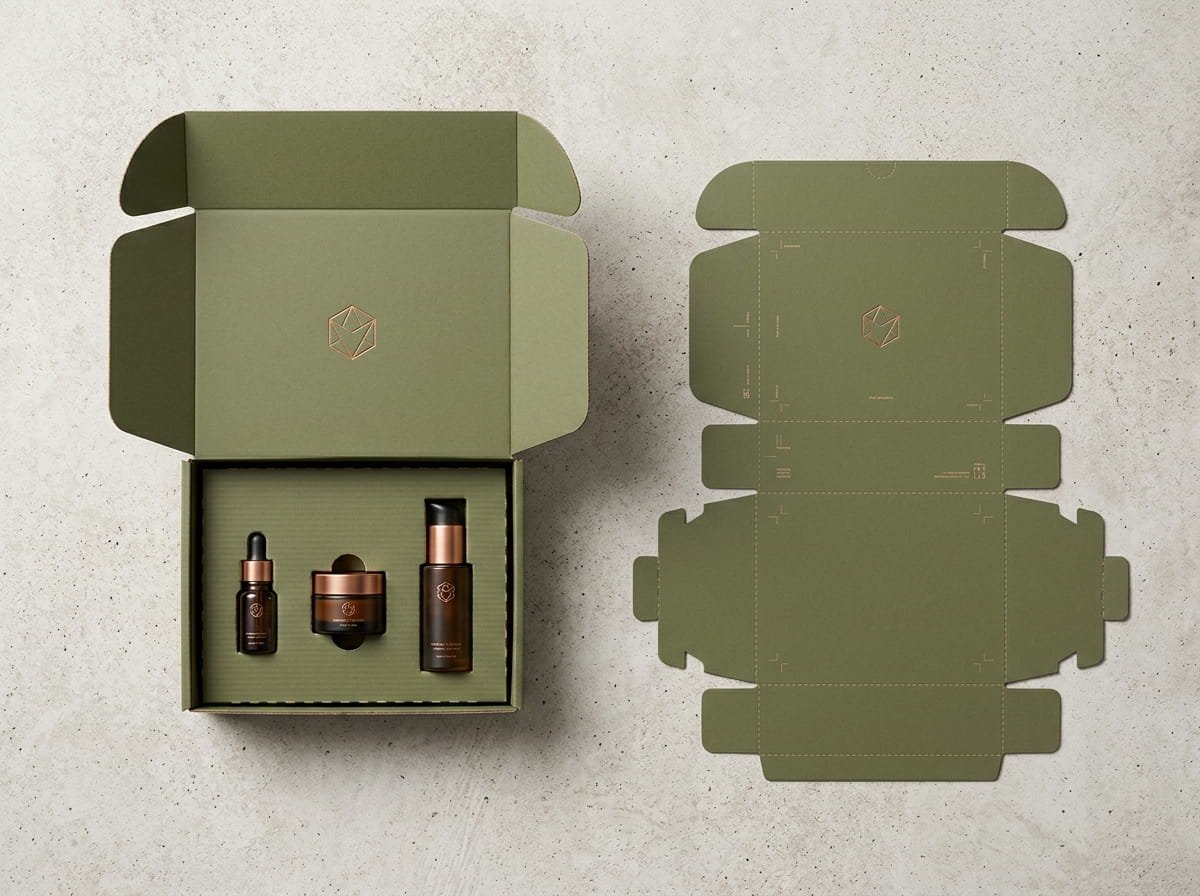
Structure decides how the box protects, opens, and presents. Mailer boxes suit e-commerce because they ship flat and assemble quickly. Tuck end cartons suit light retail items. Sleeve and tray boxes create a neat reveal for gifts. Two piece lid and base boxes suit premium goods. Hexagonal, pillow, and display boxes suit specialty products and retail counters. A designer can also combine features, such as a mailer with a built-in handle or a carton with a tear strip. Share your product, your shipping route, and your customer experience goals, and your supplier will recommend the best structure for your bespoke cardboard boxes.
Select the Right Board and Material
Board choice sets strength, print quality, and cost. Corrugated board protects heavy or fragile items in transit. E flute offers a smooth surface for sharp print, while B flute and double wall board add strength. Folding carton board, usually 300 to 400 gsm, suits retail products with detailed artwork. Kraft board gives a natural, earthy look that suits eco-minded brands. Rigid board, wrapped in printed paper, creates a luxury feel for gifts and high-value goods. Ask for samples in the real material before you order. A quick squeeze, drop, and stack test shows how your bespoke packaging will perform in real conditions.
Measure Your Product for a Perfect Fit
Accurate measurements decide whether the box works. Measure the length, width, and height of your product in millimetres, and always list them in the same order. Add clearance for the board thickness and for any insert. A snug fit protects the product, but a box that fits too tightly frustrates the customer who opens it. Weigh the finished product and note any fragile points. Send photos or a physical sample to your supplier if you can, because a real item beats a spreadsheet. Good measurements save you from remakes and keep bespoke cardboard boxes on schedule.
Print and Finish Your Bespoke Packaging
Print turns a fitted box into a brand moment. Digital printing handles short runs and full colour artwork. Offset lithography delivers rich, consistent colour on larger orders. Flexography prints bold, simple graphics on corrugated board at low cost. Screen printing adds opaque colour on dark or kraft board. Finishes then change how the box feels. Matt lamination looks modern, soft touch lamination feels velvety, and aqueous varnish offers a recyclable alternative to film. Spot UV highlights a logo, foil stamping adds metallic shine, and embossing adds texture. Pick one or two finishes for your bespoke packaging, because too many effects dilute the impact.
Add Inserts That Protect and Present
Inserts hold the product in place and shape the unboxing. Corrugated inserts cut to the product outline stop movement during delivery. Moulded pulp trays suit bottles and electronics, and they recycle easily. Foam gives strong protection for delicate items, though it recycles poorly, so many brands now choose paper alternatives. Card dividers separate multi-item sets, and printed tissue adds a soft layer of branding. A good insert makes bespoke cardboard boxes feel intentional, because the product sits in a designed space rather than loose inside a carton. Test the insert with your actual product before you approve production.
Follow a Simple Design Process
A clear process keeps the project on track. First, write a brief with your product details, quantity, budget, and brand goals. Second, request a quote and a dieline template from your supplier. Third, place your artwork on the dieline, using CMYK colour, three millimetres of bleed, and outlined fonts. Fourth, approve a digital proof, and ask for a white sample or a printed sample for structural tests. Fifth, confirm the production schedule and delivery date in writing. Brands that follow these steps usually finish bespoke packaging projects faster, with fewer corrections and clearer costs.
Understand the Cost of Bespoke Cardboard Boxes
Bespoke cardboard boxes cost more per unit than stock cartons at small volumes, and the gap narrows as quantity rises. Several factors drive the price. Tooling comes first, because a custom die adds a one-off fee. Board type and thickness come next, followed by print method, ink colours, finishes, and inserts. Quantity affects everything, since setup costs spread across more boxes. Ask for quotes at three quantities, such as 250, 500, and 1,000, to see the price breaks. A transparent quote lists unit price, tooling, proofs, and delivery separately. Remember to weigh the saving from fewer damages and lower shipping weight, which often offsets the higher box price.
Plan for Sustainable Bespoke Packaging
Customers care about waste, and a fitted box already reduces it. Right-sized bespoke cardboard boxes use less board and need less filler. Choose recycled or FSC certified material, water-based inks, and aqueous coatings. Avoid plastic windows, foam, and mixed materials that recycling centres cannot separate. Add a short recycling instruction on the box so customers know what to do. UK brands should also check Extended Producer Responsibility rules, which place reporting and fee duties on many packaging users. Your supplier can advise which materials keep your bespoke packaging compliant and easy to recycle.
Choose a Reliable Bespoke Packaging Supplier
A strong supplier answers questions clearly and shows real work. Ask for samples of similar projects. Check minimum order quantities, proofing options, and lead times in writing. Confirm whether the supplier designs the structure in house, since that service saves time on complex bespoke cardboard boxes. Ask what happens if a batch arrives faulty, and read recent customer reviews. Compare at least three quotes before you decide. Local suppliers often deliver faster and make communication easier, while overseas suppliers sometimes offer lower prices but longer lead times and customs costs. Pick the partner who balances price, quality, and honesty.
Avoid Common Mistakes
Several errors repeat across projects. Brands skip the physical sample and then discover a fit problem after production. They measure the product but forget the insert thickness. They send low-resolution artwork or RGB files, which print dull. They choose complex finishes on a tight budget. They also order too many boxes before testing the design with real customers. Start with a sample run, gather feedback, and refine the design. This approach keeps bespoke packaging affordable and protects your cash flow.
Final Thoughts on Bespoke Cardboard Boxes
Off-the-shelf boxes serve basic needs, but they cannot match a product’s shape, protect it perfectly, or tell your brand story. Bespoke cardboard boxes close that gap with the right size, structure, material, and print. Measure carefully, test samples, and brief your supplier with clear details. Plan your budget around the full picture, including shipping savings and fewer returns. When your product deserves a better first impression, bespoke packaging turns the box into one of your strongest marketing tools.
Frequently Asked Questions
What are bespoke cardboard boxes?
Bespoke cardboard boxes are boxes made to your exact specification. You choose the size, structure, board, print, and finish, and the supplier builds a custom die to produce them. They fit your product precisely and carry your branding.
What is the difference between bespoke packaging and custom packaging?
Custom packaging usually adds your logo or colours to a standard box. Bespoke packaging goes further, with a new size, structure, or insert designed around your product. The terms overlap, so always confirm the exact service in your quote.
How much do bespoke cardboard boxes cost?
Price depends on size, board, quantity, print method, finishes, and tooling. Small runs cost more per box, and large runs cost less. Request quotes at three quantities to compare price breaks before you order.
What is the minimum order for bespoke packaging?
Minimums vary by supplier and print method. Digital printers often accept 50 to 100 boxes, and offset printers usually ask for 500 to 1,000. Custom structures may need higher minimums because of die costs.
How long do bespoke cardboard boxes take to make?
Most orders take two to four weeks after proof approval. Digital production runs faster, and rigid boxes with special finishes can take six weeks or more. Structural design and sampling add extra days at the start.
Are bespoke cardboard boxes recyclable?
Yes, when you use paper-based board, water-based inks, and aqueous coatings. Avoid plastic lamination, foam inserts, and plastic windows if you need fully recyclable bespoke packaging.
When should I switch from stock boxes to bespoke packaging?
Switch when your product shifts in transit, your shipping costs rise from oversized boxes, or your brand needs a stronger first impression. Odd product shapes and premium pricing also justify bespoke cardboard boxes.