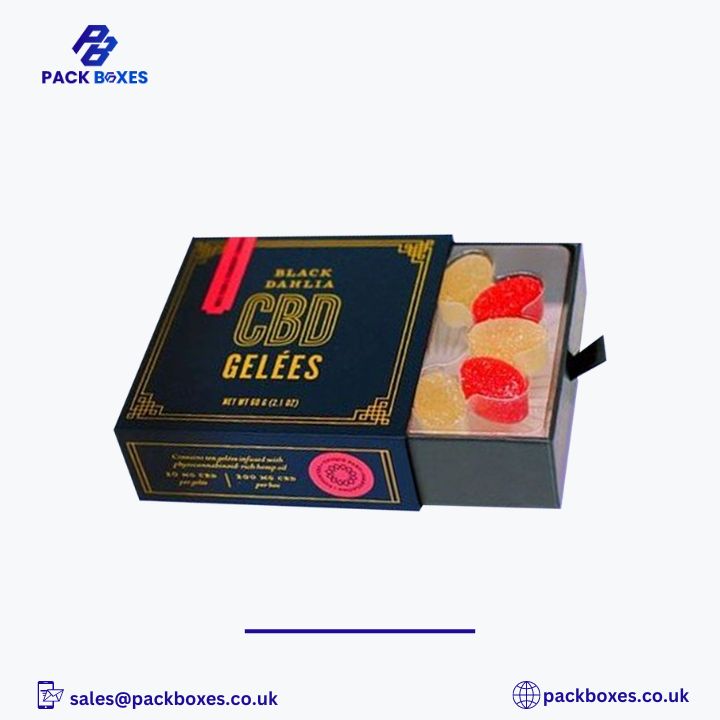
Custom boxes with inserts keep your products fixed in place from the packing table to the customer’s front door. The outer box handles knocks, stacking and weather, while the insert holds each item in its own spot. Pick the wrong insert and a glass bottle rattles, a compact cracks or a three piece gift set arrives as a jumble. Pick the right custom boxes with inserts and the product sits exactly where you put it, ready to impress the moment the lid lifts. This guide compares the three main insert materials, foam, cardboard and paper pulp, and shows you how to match each one to your product, budget and sustainability goals. By the end, you will know which type of custom boxes with inserts suits your range and what to ask your supplier before you order.
Quick Answer: Foam, Cardboard or Paper?
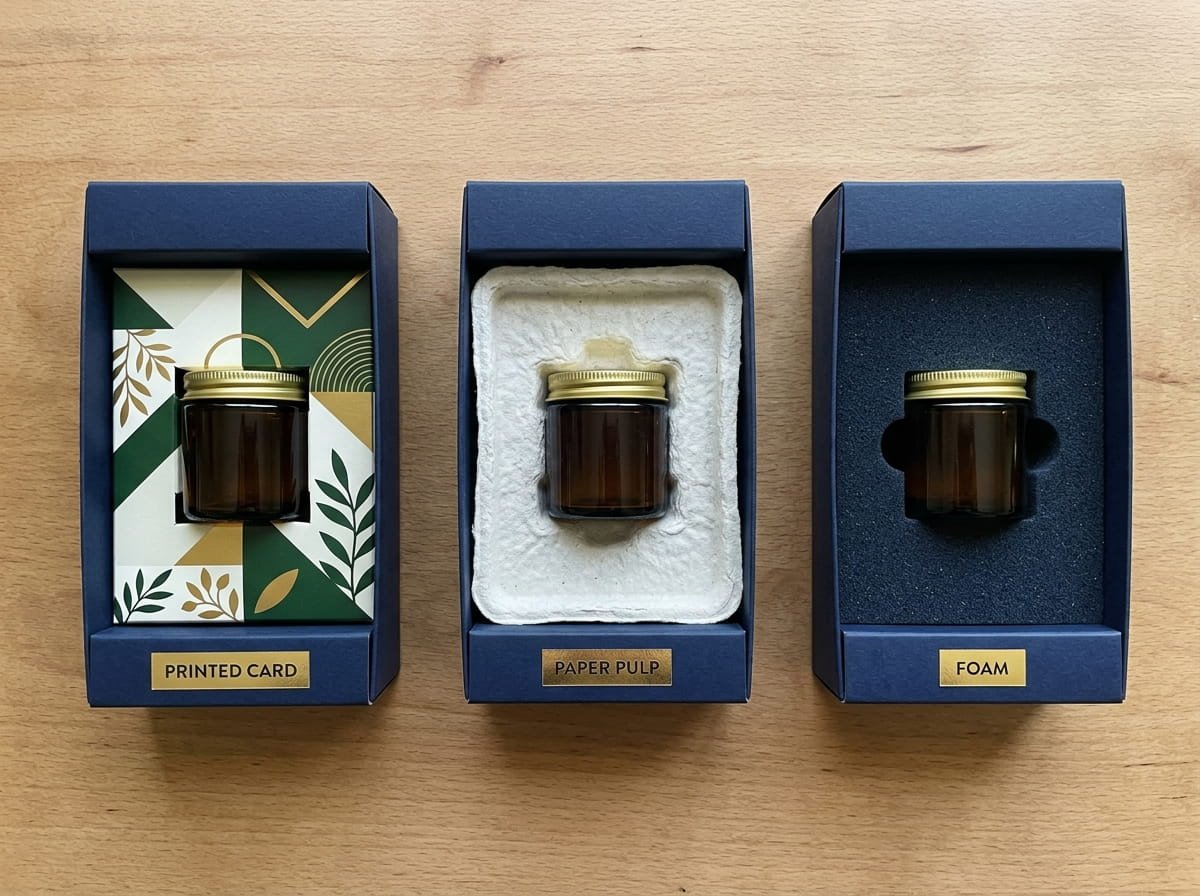
For custom boxes with inserts, foam suits fragile, heavy or high value items such as electronics, glassware and precision tools. Cardboard suits most retail, cosmetic, candle and gift products because it costs less, takes print well and goes straight into household recycling. Moulded paper pulp suits brands that want firm protection with a plastic free, natural look. Plenty of brands also mix materials in their custom boxes with inserts, for example a cardboard base with a small foam pad under the heaviest item. The best custom boxes with inserts start with the product, not the material. Weigh up fragility, weight, shipping route and brand image first, then choose the insert that ticks the most boxes.
What Are Custom Boxes with Inserts?
An insert is a shaped piece of material that sits inside a box and holds the product in a fixed position. It can include cut outs, slots, dividers, raised platforms or cavities that follow the outline of each item. Custom boxes with inserts pair an outer box made to your exact dimensions with an insert cut to the exact shape of your product. That close fit is the whole point of custom boxes with inserts. A stock box filled with loose void fill lets items shift, which raises the risk of damage and makes the opening moment feel careless. A fitted insert does the opposite. It controls movement, spaces items apart so they cannot knock into each other, and presents everything in a layout that looks planned. In short, custom boxes with inserts turn a container into a display case.
Why the Insert Matters as Much as the Box
Brands often spend weeks on outer print and only minutes on the inside of their custom boxes with inserts, yet the insert does much of the hard work. First, it protects. Products usually break when they move inside the box during drops and vibration, and an insert stops that movement. Second, it presents. When customers open custom boxes with inserts, they see the insert before they touch the product, so a clean, aligned layout signals quality straight away. Third, it speeds up packing. Staff place each item into its marked cavity instead of wrapping and padding by hand, which keeps every order consistent.
Finally, it can cut waste. A snug insert often lets you use a smaller outer box, which lowers material use and can reduce courier charges where carriers price by volume. For these reasons, custom boxes with inserts often pay for themselves through fewer breakages, faster packing and fewer returns.
Foam Inserts: Maximum Protection
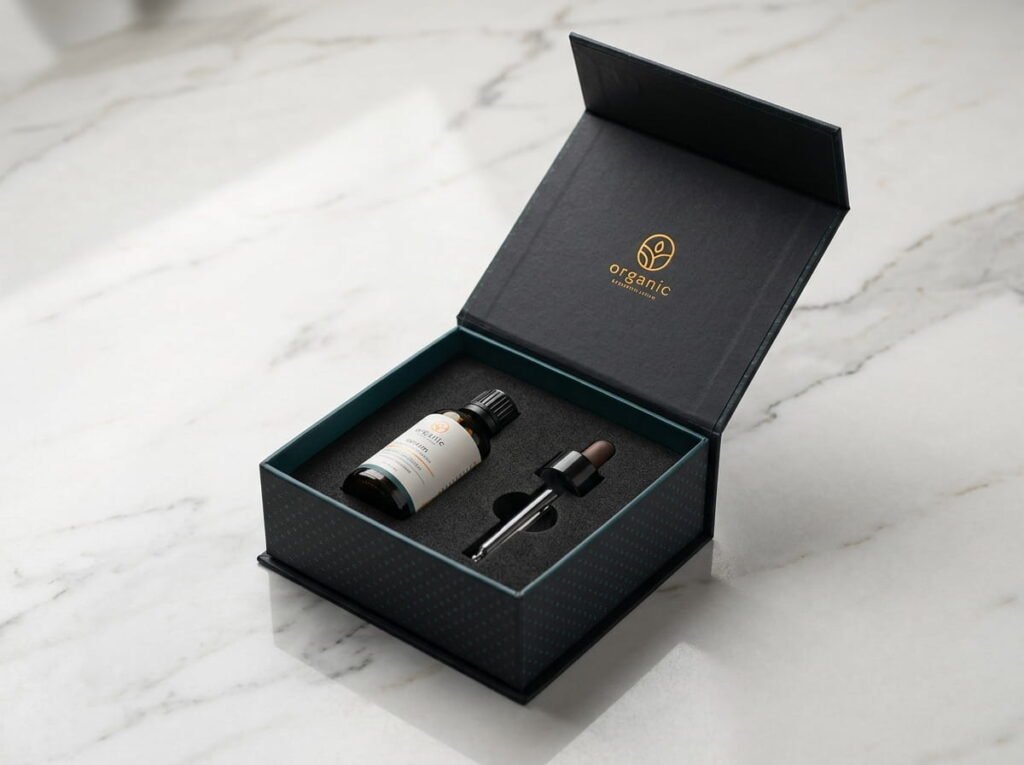
Foam remains the usual choice for custom boxes with inserts that carry anything delicate or expensive. Suppliers typically offer three main types.
- EPE (expanded polyethylene): a closed cell foam that feels light and firm and absorbs shock well. It suits electronics, tools and general fragile goods.
- PU (polyurethane): an open cell foam that feels soft and springy. It works for lightweight, delicate pieces and for pick and pluck layouts.
- EVA (ethylene vinyl acetate): a dense, smooth foam with a firm, premium feel. Jewellery, watch and gadget brands often choose it, sometimes with a flocked or velvet top layer.
Foam gives the strongest cushioning of the three materials, and cutters can shape very precise cavities in it. The downside is sustainability. Most UK household recycling collections do not accept foam, so customers may end up binning it. Foam also costs more per unit than card. Choose foam custom boxes with inserts when the product truly needs that level of protection, and print a short note telling customers how to reuse the insert.
Cardboard Inserts: Practical, Printable and Recyclable
Cardboard is the most popular material for custom boxes with inserts, and it covers two related materials. Folding paperboard is thin, smooth and easy to print, which makes it ideal for light products such as lipsticks, serums, tea tins and small candles. Corrugated board has a fluted middle layer that adds strength and cushioning, so it suits heavier items like bottles, jars and multi product kits. Manufacturers die cut both types into slots, partitions, tiered platforms and folding trays.
The biggest advantage is cost. Cardboard inserts usually work out cheaper than foam, especially on smaller runs, because one cutting die can produce the whole order. They also print well, so you can add your logo, product names, care tips or a colour that matches the outer box. Customers can flatten them and recycle them with the rest of the packaging. The limit is cushioning. Card holds items in place well but absorbs less impact than foam, so very fragile goods may need an extra layer. For most beauty, candle and gift brands, cardboard custom boxes with inserts hit the right balance of price, protection and presentation.
Paper Pulp Inserts: The Plastic Free Middle Ground
For custom boxes with inserts that need to look natural, moulded pulp works well. It starts as recycled paper or plant fibre mixed with water. Machines press the mix into a mould and dry it into a firm tray with deep, contoured cavities that hug each product. Pulp absorbs shock better than flat card and comes close to foam for many mid weight items. It also carries strong green credentials, because customers can usually recycle it with paper and card, and many pulp products will also compost.
Pulp has a natural, textured surface. Some brands love that earthy look, while others prefer the smoother finish that dry pressed pulp offers. The main trade off is tooling. Every pulp design needs its own mould, so setup costs run higher and lead times run longer than card. For brands with steady volumes, that upfront cost spreads thinly across each unit. Tech accessories, skincare sets and premium food gifts all work well in pulp custom boxes with inserts.
Foam vs Cardboard vs Paper Pulp at a Glance
| Factor | Foam | Cardboard | Paper Pulp |
|---|---|---|---|
| Protection | Highest | Moderate | High |
| Unit cost | Higher | Lowest | Medium |
| Setup cost | Low to medium | Low | Higher (needs a mould) |
| Printing | Limited | Full colour print | Limited |
| UK kerbside recycling | Usually not accepted | Widely accepted | Widely accepted |
| Best for | Electronics, glass, luxury goods | Cosmetics, candles, gift sets | Eco brands, tech, skincare |
How to Choose: Six Questions to Ask
Run through these questions before you request a quote for custom boxes with inserts.
- How fragile is the product? Glass, ceramics and electronics lean towards foam or pulp. Sturdy items such as tins and soap bars sit happily in card.
- How heavy is it? Heavy items need corrugated board, dense foam or thick pulp so the insert does not sag or tear.
- How will it travel? Courier networks treat parcels far more roughly than a shop shelf, so online orders need more protection than retail stock.
- What image do you want? In custom boxes with inserts, velvet topped EVA says luxury. Printed card says crafted and branded. Pulp says natural and responsible.
- How much do your buyers care about sustainability? If your brand promises low waste, foam sends a mixed message, while card and pulp keep the story consistent.
- What volume and budget do you have? Small runs of custom boxes with inserts favour cardboard. Large, steady runs make a pulp mould worthwhile.
Matching Inserts to Popular Products
Cosmetics and skincare: printed paperboard custom boxes with inserts, with a cut out for each bottle or compact, look neat and keep costs low. Pulp suits clean beauty brands.
Candles: custom boxes with inserts made from corrugated or rigid card stop glass jars sliding. Add a small pull tab so customers can lift the jar out easily.
Perfume: custom boxes with inserts in EVA foam or a card platform wrapped in matching paper suits luxury fragrance, where the reveal matters most.
Electronics and gadgets: EPE foam or pulp protects screens and ports. Add separate compartments for cables and chargers.
Gift sets and subscription boxes: custom boxes with inserts that use multi cavity card show every item at once and create a strong first impression.
Food and drink: pulp and card inserts hold bottles, jars and chocolates securely. For food custom boxes with inserts, ask your supplier to confirm food contact suitability for anything that touches unwrapped food.
Design Tips for a Perfect Fit
Good custom boxes with inserts begin with accurate sizes. Measure every product with digital callipers, including caps, pumps and labels, and note the widest point. Share these sizes with your supplier, plus physical samples if you can. Ask for a small tolerance so items slide in without force but do not wobble. Add thumb notches or ribbon pull tabs so customers can lift products out without tearing the insert.
Match the insert colour to the box interior for a joined up look. Then order a sample and test it yourself. Shake it, drop it from waist height and post one to your own address. A real world test exposes problems that no drawing will show, and it gives you confidence before you commit to a full run of custom boxes with inserts.
Common Mistakes to Avoid
The most common mistake is measuring a product without its secondary carton, then finding the boxed bottle will not fit the cavity. Another is ordering foam custom boxes with inserts by default for items that card would protect perfectly well, which adds cost and waste. Some brands also forget about assembly. An insert that takes a full minute to fold slows down every single order, so ask for a design that folds quickly or arrives pre glued. Lastly, think about the reveal order. Place the hero product in the centre or on top, with smaller accessories around it, so the customer sees the best item first when they open your custom boxes with inserts.
Final Word
The right custom boxes with inserts depend on what you sell and how it travels. Foam wins on pure protection, cardboard wins on cost and print, and paper pulp offers a strong, plastic free balance between the two. Start with your product’s weight, fragility and shipping route, then let your brand values guide the final decision. Well planned custom boxes with inserts protect your stock, speed up packing and give customers a first look they remember. Ask your supplier for a sample, test it hard and refine the fit before you place a full order of custom boxes with inserts.
Frequently Asked Questions
1. What are custom boxes with inserts?
Custom boxes with inserts are boxes made to your product’s size with a shaped insert inside that holds each item in a fixed position. The insert can be foam, cardboard or moulded paper pulp, and it protects the product while presenting it neatly.
2. Which insert material offers the best protection?
Among custom boxes with inserts, foam versions offer the best protection, especially EPE and EVA foam, because it absorbs shock and lets cutters shape precise cavities. Moulded pulp comes a close second for many mid weight products.
3. Are cardboard inserts strong enough for glass products?
Custom boxes with inserts in corrugated cardboard protect most glass jars and bottles well when the cavity fits tightly. For thin or very fragile glass that ships by courier, add a foam pad or switch to pulp.
4. Are custom boxes with inserts recyclable?
Custom boxes with inserts made from cardboard or paper pulp are usually recyclable in UK household collections. Most foam inserts are not accepted kerbside, so customers would need to reuse them or take them to a specialist point.
5. How much do custom boxes with inserts cost?
The price depends on box style, size, insert material, print and order quantity. Cardboard inserts usually cost the least, foam costs more per unit, and pulp needs an upfront mould cost that suits larger runs.
6. What is the difference between EPE, PU and EVA foam?
EPE is a light, firm closed cell foam for general protection. PU is a soft open cell foam for delicate items. EVA is a dense, smooth foam with a premium feel, popular for jewellery and gadgets.
7. Can I print on box inserts?
Yes. In custom boxes with inserts, you can print on cardboard inserts in full colour, adding logos, product names or instructions. Foam and pulp take limited printing, so brands often brand them with a printed card overlay or a sticker.
8. How do I measure my product for an insert?
Measure length, width and height at the widest point with digital callipers, including caps, pumps and labels. Send these sizes for your custom boxes with inserts, plus a physical sample if possible, so your supplier can set the right tolerance.
9. Which insert works best for cosmetics?
Custom boxes with inserts in printed paperboard work best for most cosmetics because they cost less, print well and recycle easily. Clean beauty brands often choose moulded pulp to support a plastic free message.
10. Can I order a sample before a full run?
Most packaging suppliers offer samples or prototypes of custom boxes with inserts. Always order one, then drop test it and post it to yourself to confirm the fit before you approve production.